

 Ar
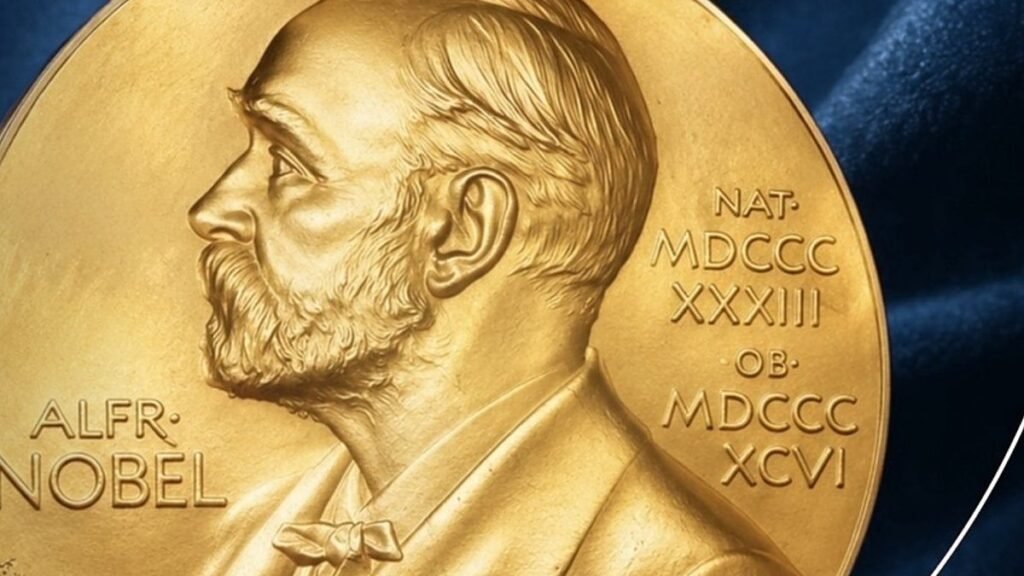
The 2026 Nobel Prize in Physiology or Medicine, announced on 5 October 2026, was awarded jointly to Karl Deisseroth, Peter Hegemann and Georg Nagel “for their discoveries concerning light-gated ion channels and optogenetics.”
Peter Hegemann and Georg Nagel found that a green alga senses light with a protein that is itself an ion channel. Karl Deisseroth then put it into nerve cells, so that a flash of blue light switches them on. The result, optogenetics, is transforming brain research and is now being tested to restore sight.
The laureates
- Karl Deisseroth (b. 1971, Stanford University, USA) made nerve cells respond to light (2005).
- Peter Hegemann (b. 1954, Humboldt University, Berlin, Germany) proposed a protein that senses light and is an ion channel.
- Georg Nagel (b. 1953, University of Würzburg, Germany) proved these are channels opened by light (2002–03).
From an alga to the eye
- Early 1990s: an alga reacts to light in a flash.
- 2002–2003: the secret is a protein opened by light; a second protein reacts strongly and fast.
- 2005–2007: light switches on nerve cells, the method gets its name, optogenetics, and light controls nerve cells in living mice.
- 2012: light reawakens a stored memory.
- 2021: a blind patient regains some vision.
- 2026: the Nobel Prize, and an eye treatment under FDA review.
Why it matters for eye care
In a retinitis pigmentosa trial, a blind person regained some vision and, with light-emitting glasses, could grasp objects on a table. For retinitis pigmentosa, an FDA decision on MOGENRY is expected in the first half of 2027. For geographic atrophy, a Phase 2 trial is planned.
Source: OptiVision Newsletter, Vol. 5 | November 2026. Read the full edition.